
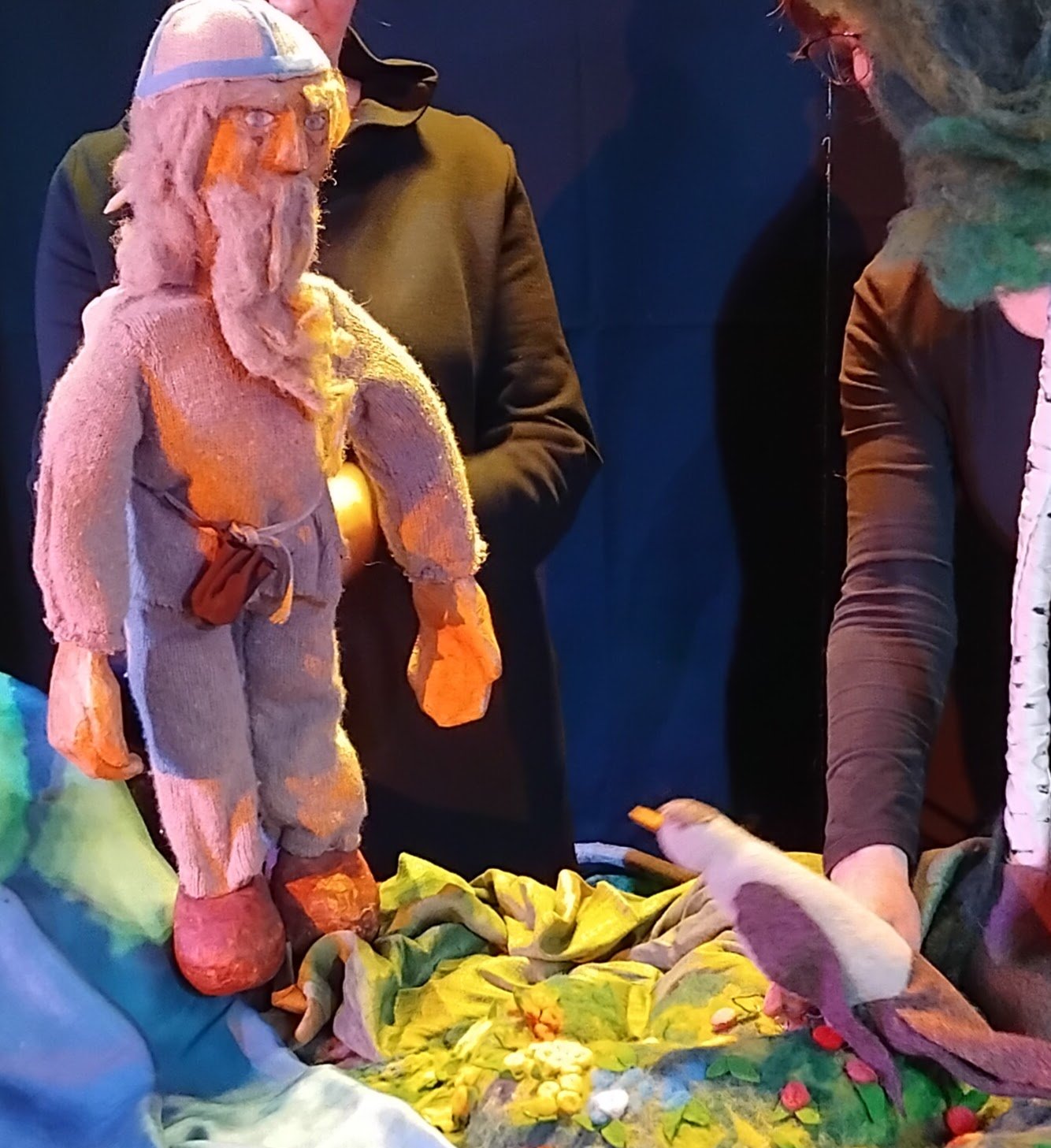
On the 28th of February we celebrate The Kalevala, the Epic Poem of Finland. Here is some pictures from our performance at Kalevala Event in Helsinki. The puppet show was based on the first two poems of The Kalevala (total number of poems being 50), that describe the birth of the world and Väinämöinen. Characteristic features of poems of Kalevala are the initial chord of the words, repetition of ideas in verses and a large number of spells. Magic is present in every poem, and the characters and events can be seen as mental or spiritual images. The Kalevala is a collection of poems that Elias Lönnrot compiled from Finnish, Karelian and Ingrian oral folklore in 1828-1844. The publication of The Kalevala was very important for the identity of Finnish nation at the time as Finland was an autonomous part of Russia. Interest in the Kalevala still exists. I recommend to dive in the Kalevala's world!
With love,
Suvi-Maaria
Greetings from Finland
The Kalevala
1) Olipa impi, ilman tyttö
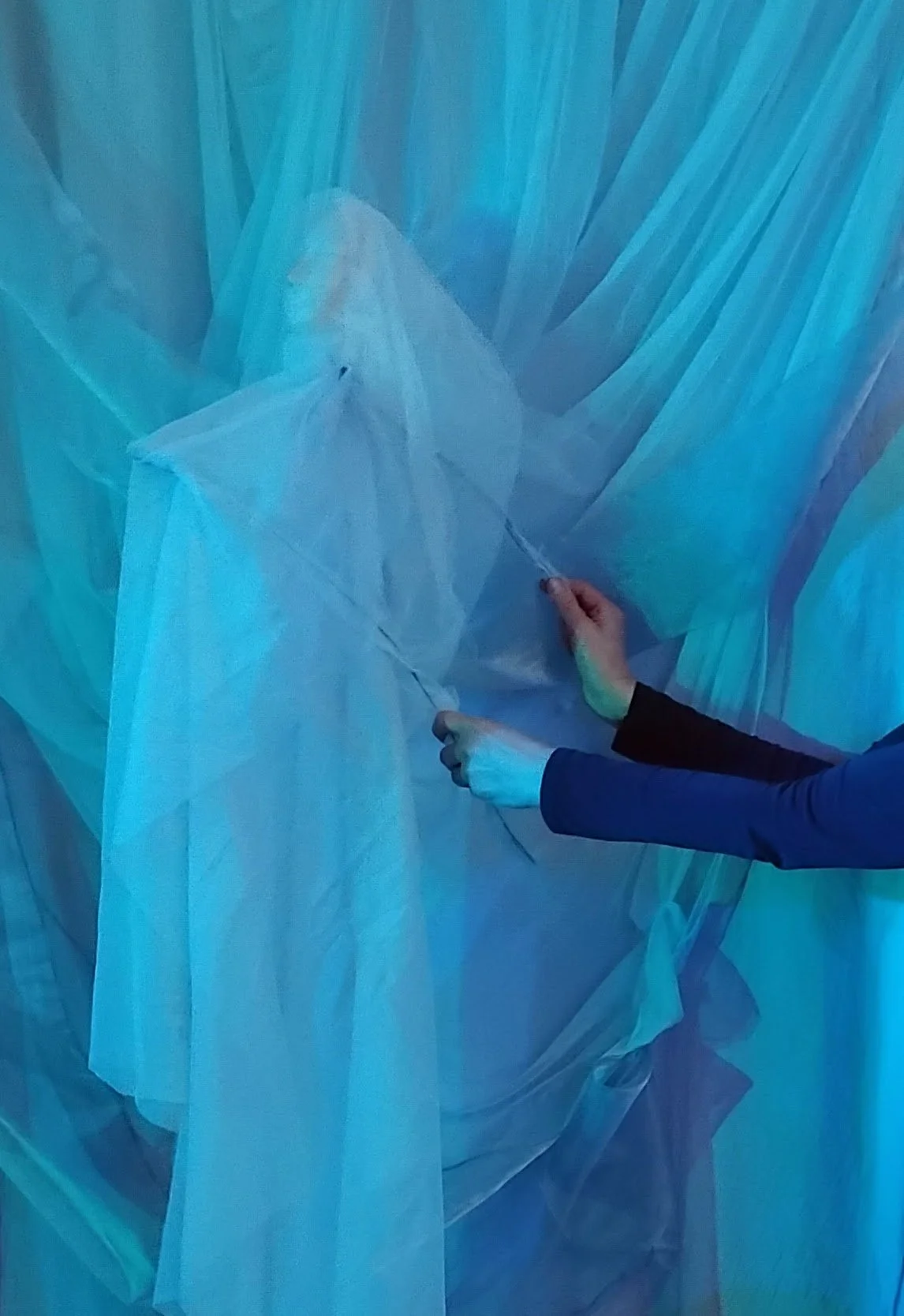
There was a lass, an air-girl
a nice nature-daughter: she
long remained holy
for ever girlish
in the air’s long yards
on its level grounds.
Her times grew weary
and her life felt strange
from being always alone
living as a lass
in the air’s long yards
in the empty wastes.
(She steps down to the waves, and the waves carry her around the sea. The wind blows her womb full, and she rolls as a water-mother. A bird flies over the sea looking for a place to build its nest. It doesn’t find any, but then the air-lass, water-mother, raises her knee out of the sea. The bird lands on the kneecap and builds the nest there, lays its eggs: six eggs of gold, an iron egg the seventh)
2) Päähän polven laskeutuvi
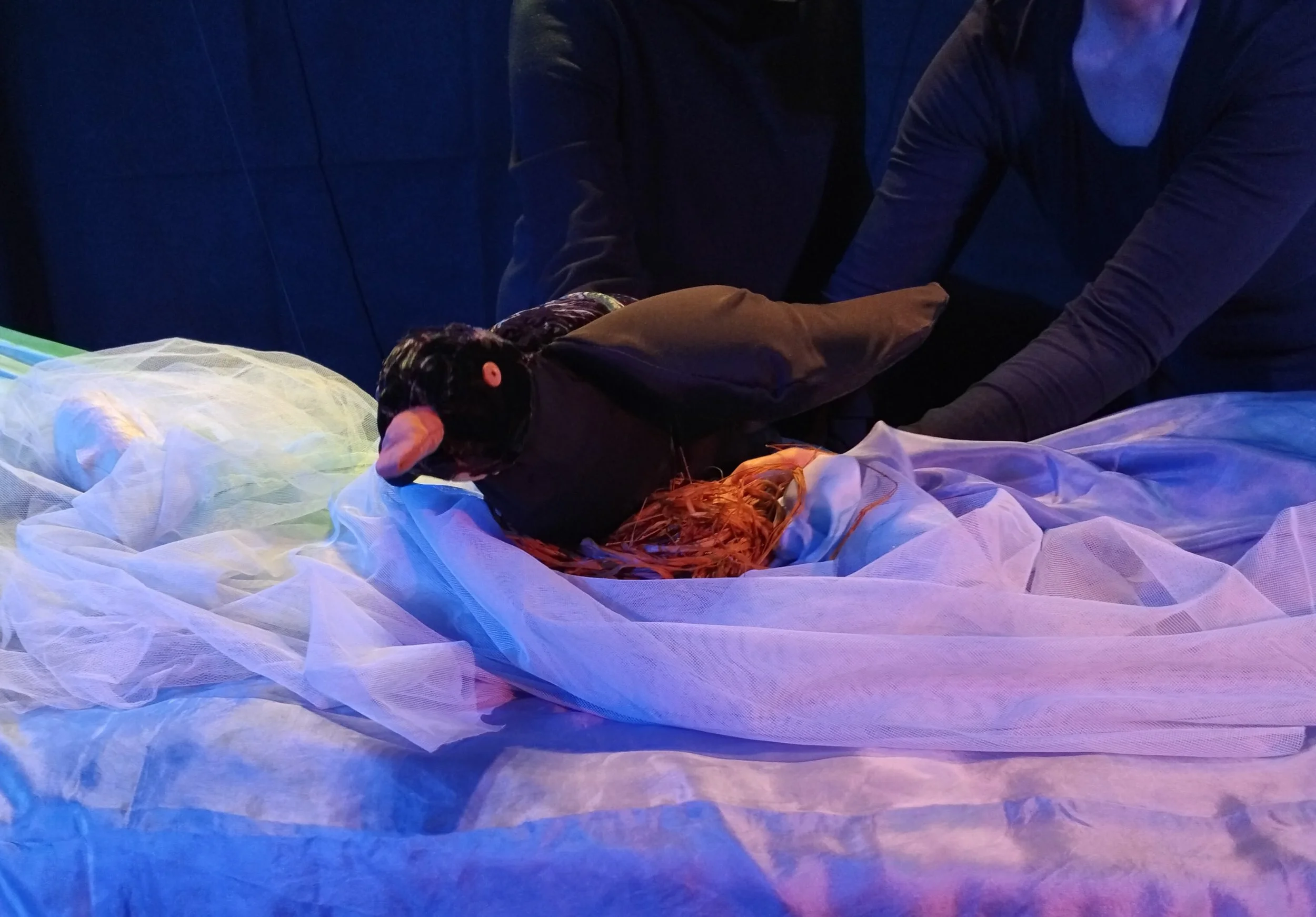
It began to hatch the eggs
To warm the kneecap
It hatched one day, it hatched two
Soon it hatched a third as well.
(The water-mother/air-lass feels that she is catching fire, shakes
her knee, and the eggs fall into the sea. But the pieces changed into
good things: the earth, the sun, the moon, stars and clouds.)
3) Siihen saaret siivoeli
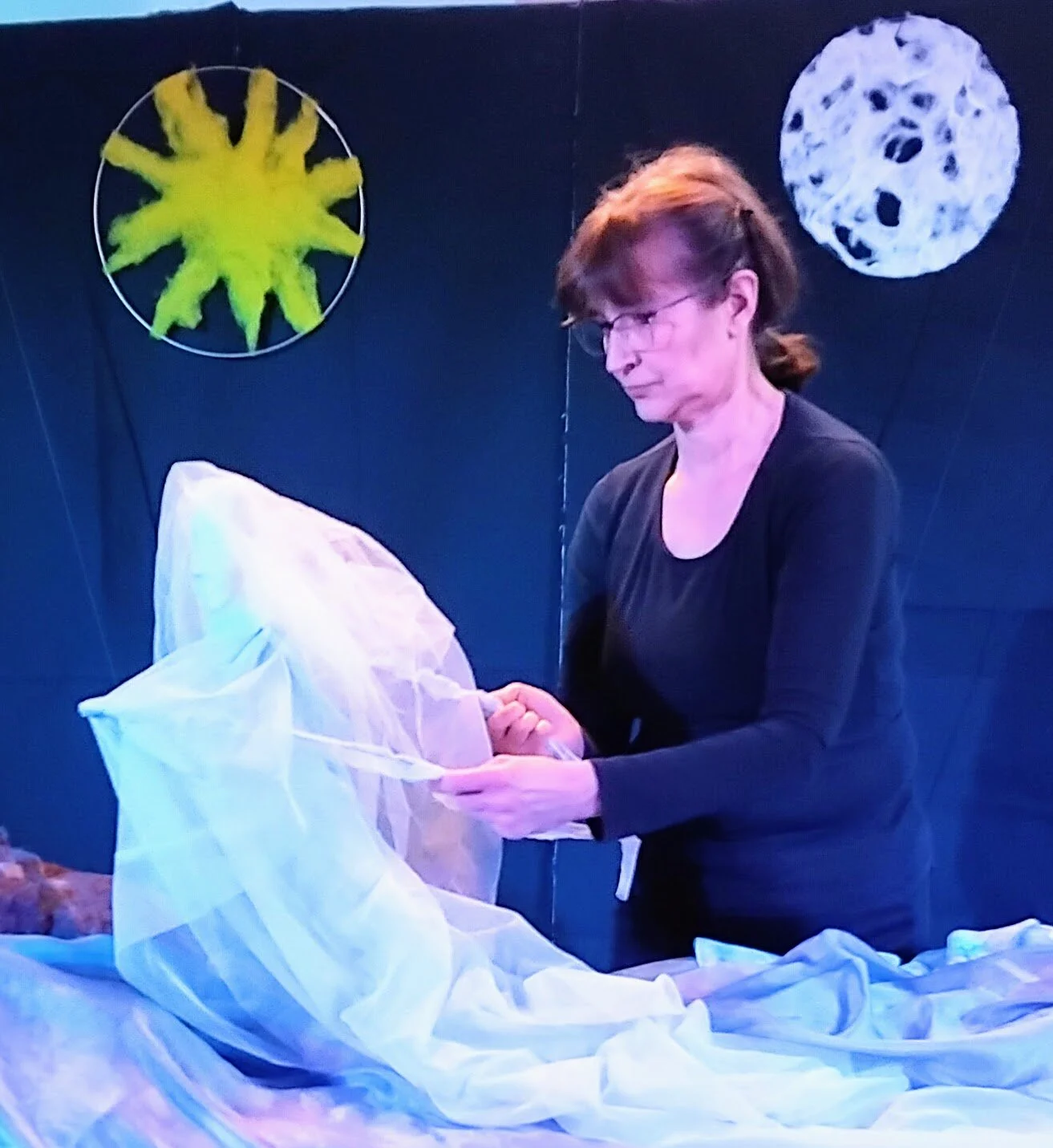
(Ages go on, the water-mother swims in the sea, then she raises up and starts to shape the world)
Where she turned her hand around
there she arranged the headlands;
where her foot touched the bottom
there she dug out the fish troughs.
(Ages go on, then “Steady old Väinämöinen, the bold bard” is born from the water-mother / air-daughter. He lolled in the sea and finally comes on a headland. There he rose up, on a mainland with no trees)
4) Sampsa maita kylvämähän
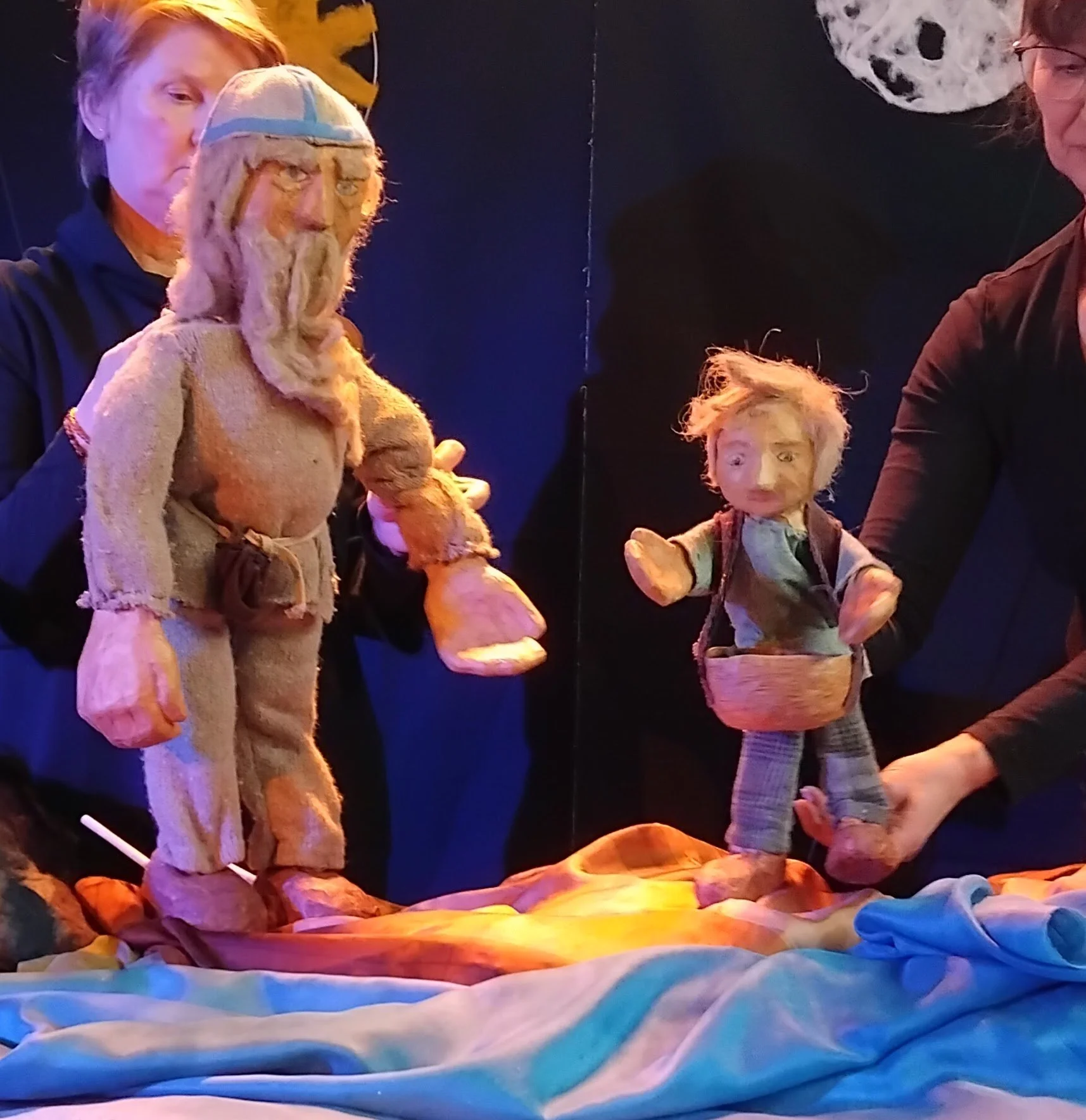
The old Väinämöinen said:
‘This is why it has been left
the birch tree growing –
for you, for a calling-tree.
There call now, cuckoo
and carol, fine-breast
warble, silver-breast
tin-breast, tinkle forth!
Call evenings and call mornings
once at midday too
that my weather may be fair
my forests pleasant
my shores prosperous
my sides full of corn!’
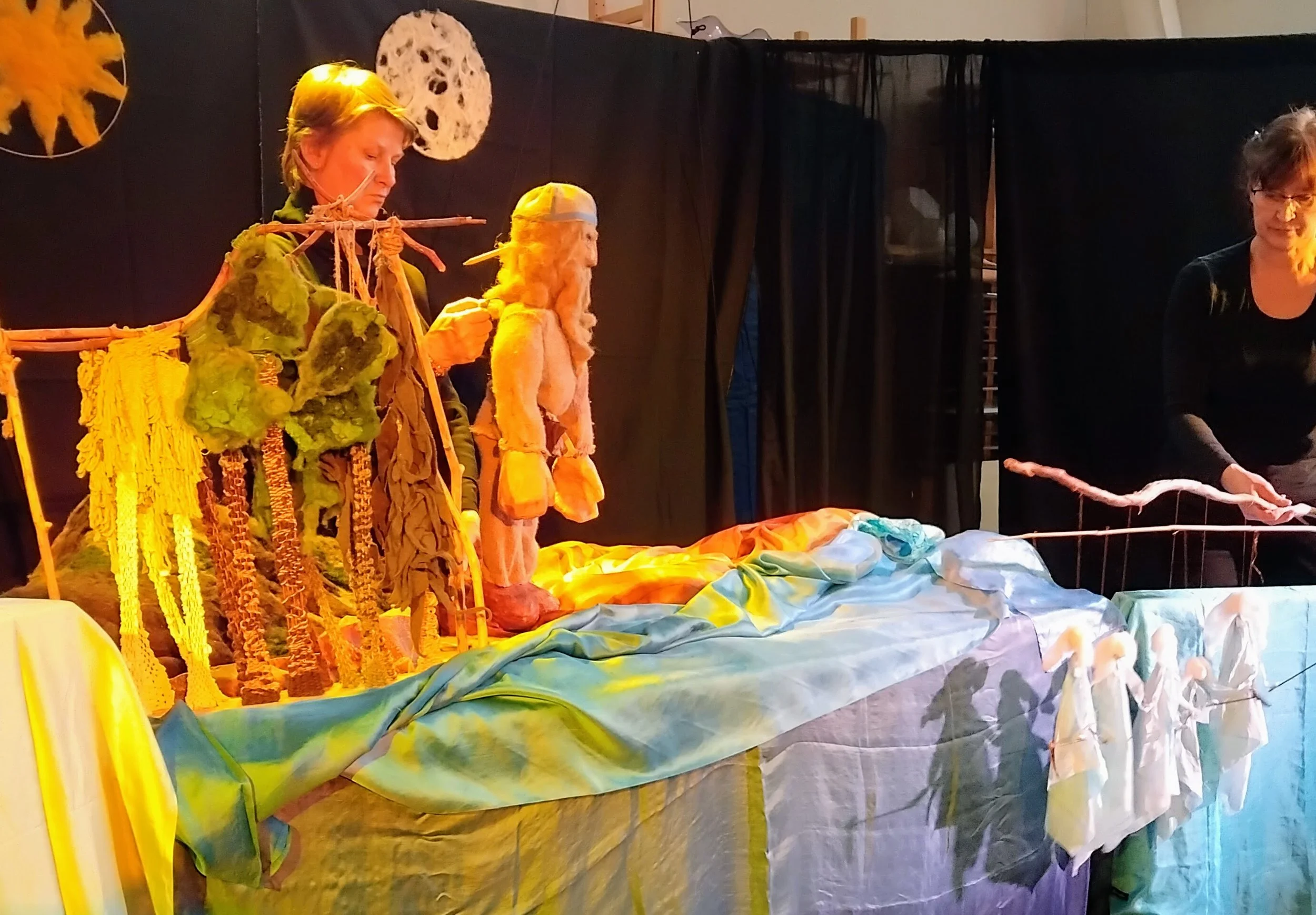
So, he sees four maids
yes, five brides of the water:
they were mowing turf
cutting down dew-straw
on the misty island’s tip
at the foggy island’s end
what they mowed they raked
dragged it all into a stack.
(Then, from the sea rises the Beast, and puts a fire to the hay. To the ashes lands a leaf and an acorn, from which grows a big oak. So big is it, that it blocks the sun shining and the moon gleaming. Väinämöinen ponders: might there be an oak-breaker?)
6) Nousipa merestä miesi
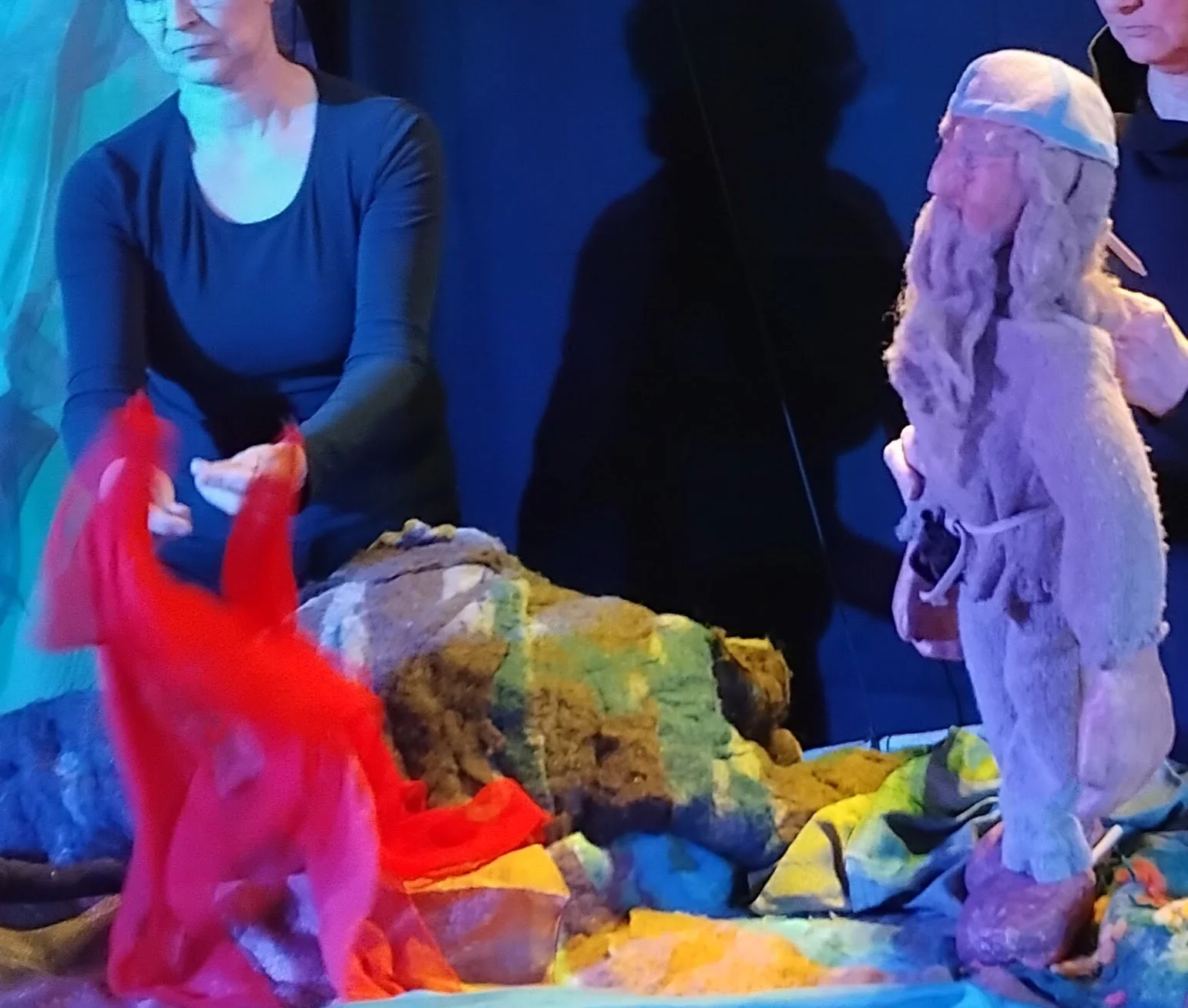
Out of the sea a man rose
a fellow came up from the billow:
he was not big as big goes
nor all that small as small goes
(Väinämöinen questions the man’s ability to break the oak as he is quite small)
7) Näki miehen muuttunehen
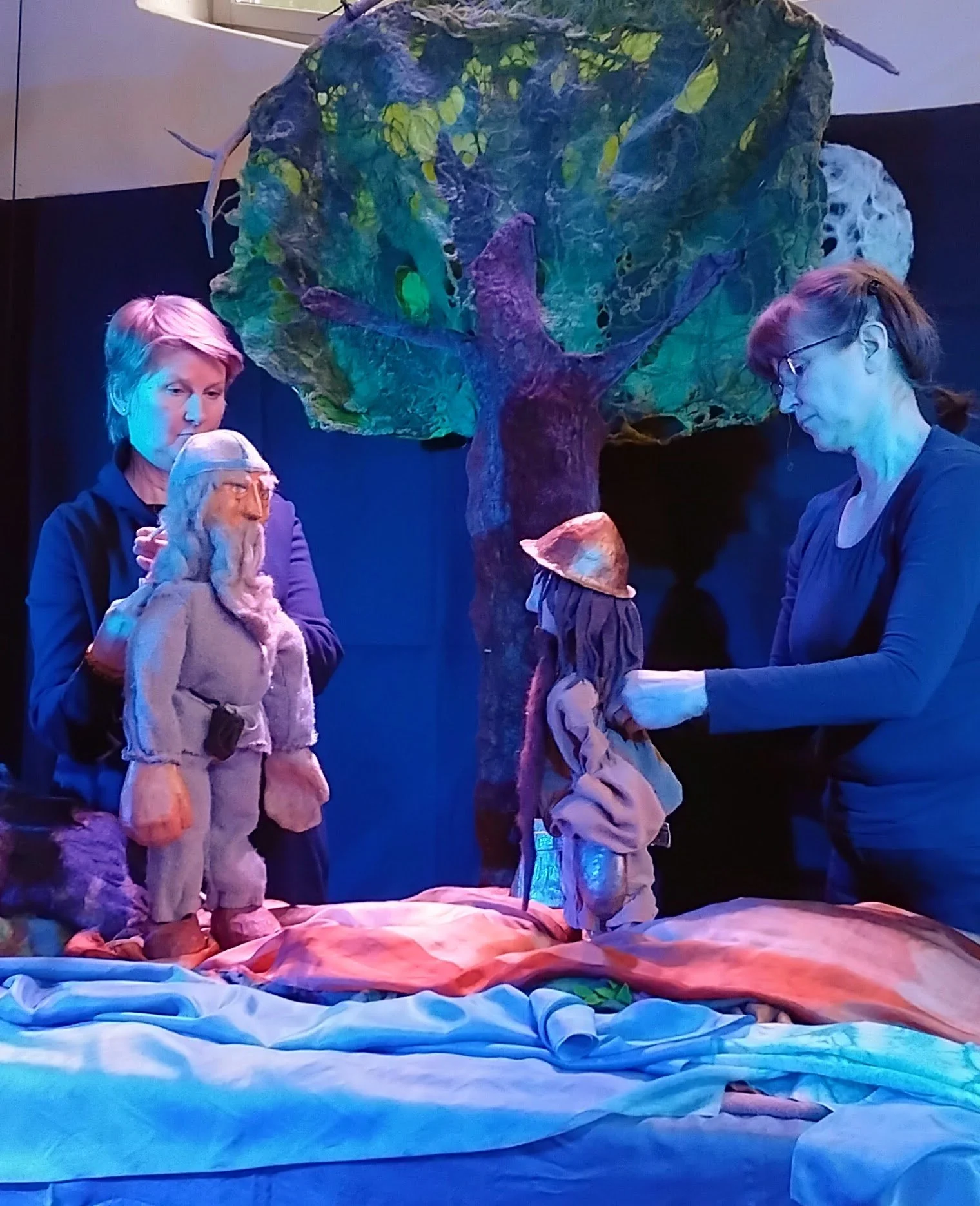
He just managed to say that;
he glances once more:
he saw the man changed
the fellow renewed!
(The Oak-cutter goes and strikes 3 times, and the big oak falls and lets the sun shine again. Now the nature starts to flourish, grasses, trees and flowers grow. Only the barley doesn’t grow. Väinämöinen finds some seeds from the seashore, takes them with him and goes to sow them in earth. A tomtit chirps from a tree: The barley doesn’t grow unless the earth is pressed down, unless a clearing is felled and is burned with fire. Väinämöinen has a sharp axe made, and cuts down all the fine trees, except one birch for the birds’ resting place. An eagle flows over the sky and asks about the tree left standing. Väinämöinen answers that the birch is for the eagle to sit on. The eagle likes this and strikes a fire. North wind burns all the trees to ash.)
8) Poltti kaikki puut poroksi
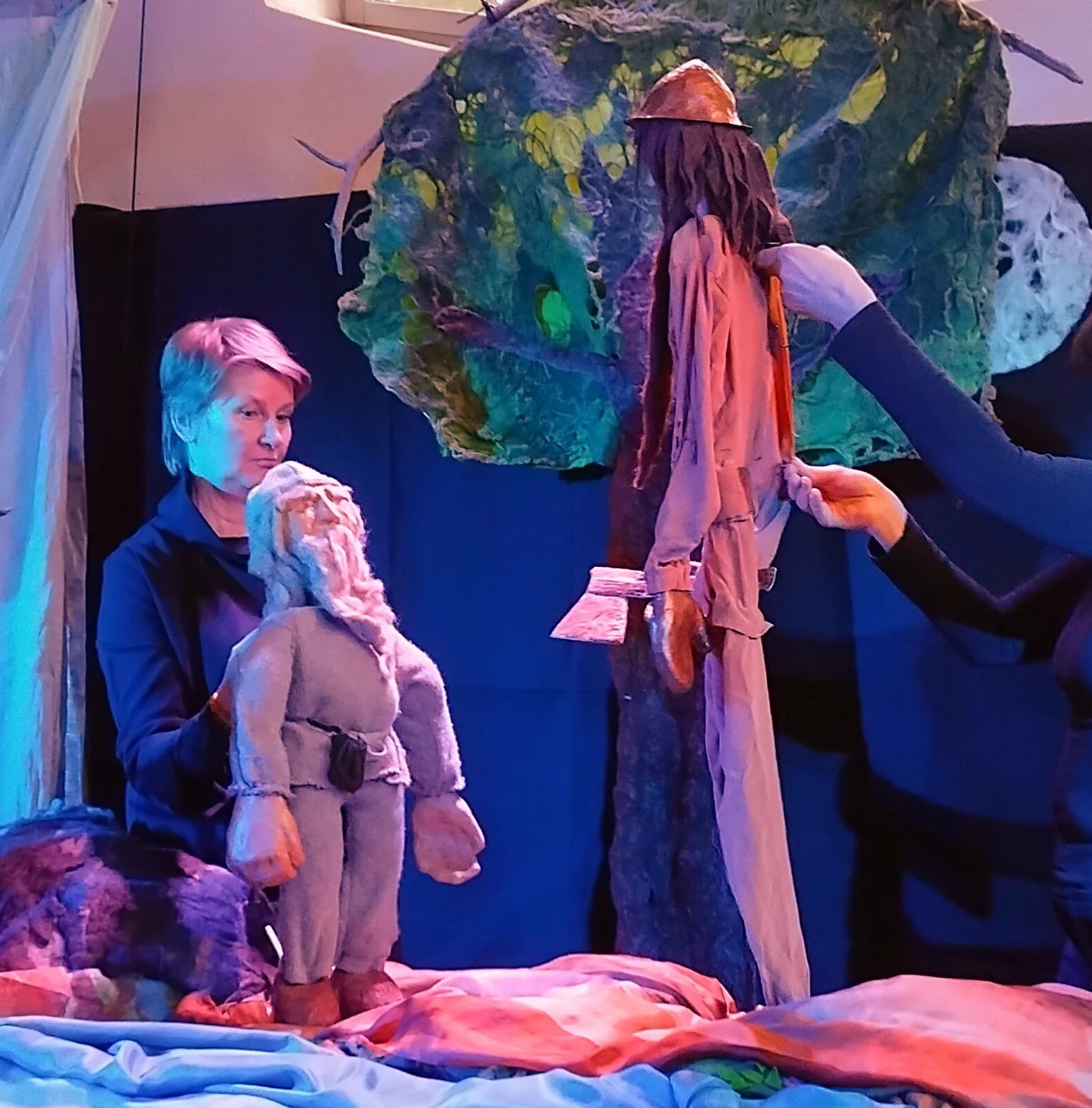
The north wind burnt the clearing
the north-east quite consumed it:
it burned all trees to ash
reduced them to dust.
(Now Väinämöinen takes the seeds and goes to sow them in earth. After some time he comes to look his sowings and sees the barley grow. A cuckoo comes and asks about the one unfelled birch tree.)
9) Niin tuli kevätkäkönen
Pellervoinen, the field’s son
Sampsa, tiny boy –
he is to sow lands
and make crops fruitful!
He got down to sowing lands
he sowed lands, sowed swamps
he sowed sandy glades
he has boulders set.
(The trees start to grow. Väinämöinen goes to look where Sampsa had seeded. He sees that everything else had grown, but not the oak)
5) Niin näkevi neljä neittä